
Yes, you can make a noisy generator much quieter. Moving it farther away and pointing the exhaust away from the house costs nothing and can cut the noise you hear roughly in half. Add anti-vibration pads and a ventilated baffle box, and a loud open-frame generator can drop 10 to 15 decibels, which sounds about half as loud to your ears.
Here is the part most people do not know. In New Jersey, the nighttime noise limit at your neighbor’s property line is 50 decibels. A typical open-frame generator runs 70 to 85 decibels. Your generator is louder than the legal nighttime limit. Emergency use is exempt while the power is out, but the limit applies the moment you are testing it or running it after the emergency ends, and fines for residents run up to $2,000 a day. More on that below.
How loud is your generator, really?
Generator noise is measured at 23 feet, which is the industry standard distance. A conventional open-frame portable generator runs 70 to 85 decibels at that distance. An inverter generator at quarter load sits around 50 to 58 decibels. That gap is the whole story: an inverter is built quiet, and an open-frame unit is built cheap.
Decibels are logarithmic, not linear. A 10 decibel drop cuts perceived loudness roughly in half. Dropping from 72 to 62 decibels does not sound slightly quieter. It sounds dramatically quieter. Keep that in mind as you read the numbers below, because a 10 decibel fix is a big fix.
Generator noise comes from three places: the engine itself, the exhaust, and vibration shaking whatever the generator sits on. You cannot do much about the engine without buying a different generator. The exhaust and the vibration are where the fixes live.
Start free: move it farther away and turn it around
This is the best return on zero dollars you will get anywhere in this article.
Sound drops about 6 decibels every time you double the distance. Move a generator from 10 feet away to 20 feet away and you cut 6 decibels. Move it from 10 feet to 40 feet and you cut 12 decibels, which is roughly half as loud. Distance alone, done right, is worth 6 to 12 decibels.
Two rules make distance work. First, keep it at least 20 feet from the house, with the exhaust pointed away from the house, windows, and doors. That is the carbon monoxide rule, not just a noise rule, and it is not optional. Second, point the exhaust away from where people sit and sleep, including your neighbor’s house. Rotating the generator so the exhaust faces open yard instead of a wall or a patio is free and it works, because the loudest sound comes out of the exhaust pipe in one direction.
The ground matters too. A generator sitting on concrete, pavers, or asphalt turns that hard surface into a sounding board. The vibration travels into the slab and comes back up as a low rumble you feel as much as hear. Grass or soft soil is quieter. If the only flat spot is concrete, that is what the next section is for.
The $15 fix: anti-vibration pads
The cheapest real fix is a set of rubber anti-vibration pads under the generator’s feet. The pads break the path between the shaking frame and the ground, which kills the low-frequency rumble that travels through concrete and into the house. Expect 2 to 5 decibels, mostly in the deep hum that makes a generator feel loud inside the house even when the exhaust noise is outside.
A four-pack of rubber pads costs about $15 on Amazon. Put one under each foot. A thick rubber mat under the whole unit works the same way, and a horse stall mat from a farm supply store is the budget version of the same idea.
PATIKIL anti-vibration pads, 4-pack, about $15 — link: https://www.amazon.com/dp/B0CQF4DJ5T?tag=gett00-20
The big fix: a baffle box
A baffle box is a ventilated plywood box that sits over the generator. It is the single most effective thing you can do to a generator you already own. A well-built one cuts 10 to 15 decibels, which is roughly half as loud.
The build is simple. A box of 3/4-inch plywood, sized to leave a few inches of air around the generator on every side. Line the inside walls with mass-loaded vinyl, which is a heavy, limp sheet that blocks sound the way drywall blocks sound. A 1-pound-per-square-foot vinyl sheet is the standard choice. Add acoustic foam panels on top of the vinyl to absorb echo inside the box. Foam alone does almost nothing, because foam absorbs echo but does not block noise. The vinyl does the blocking.
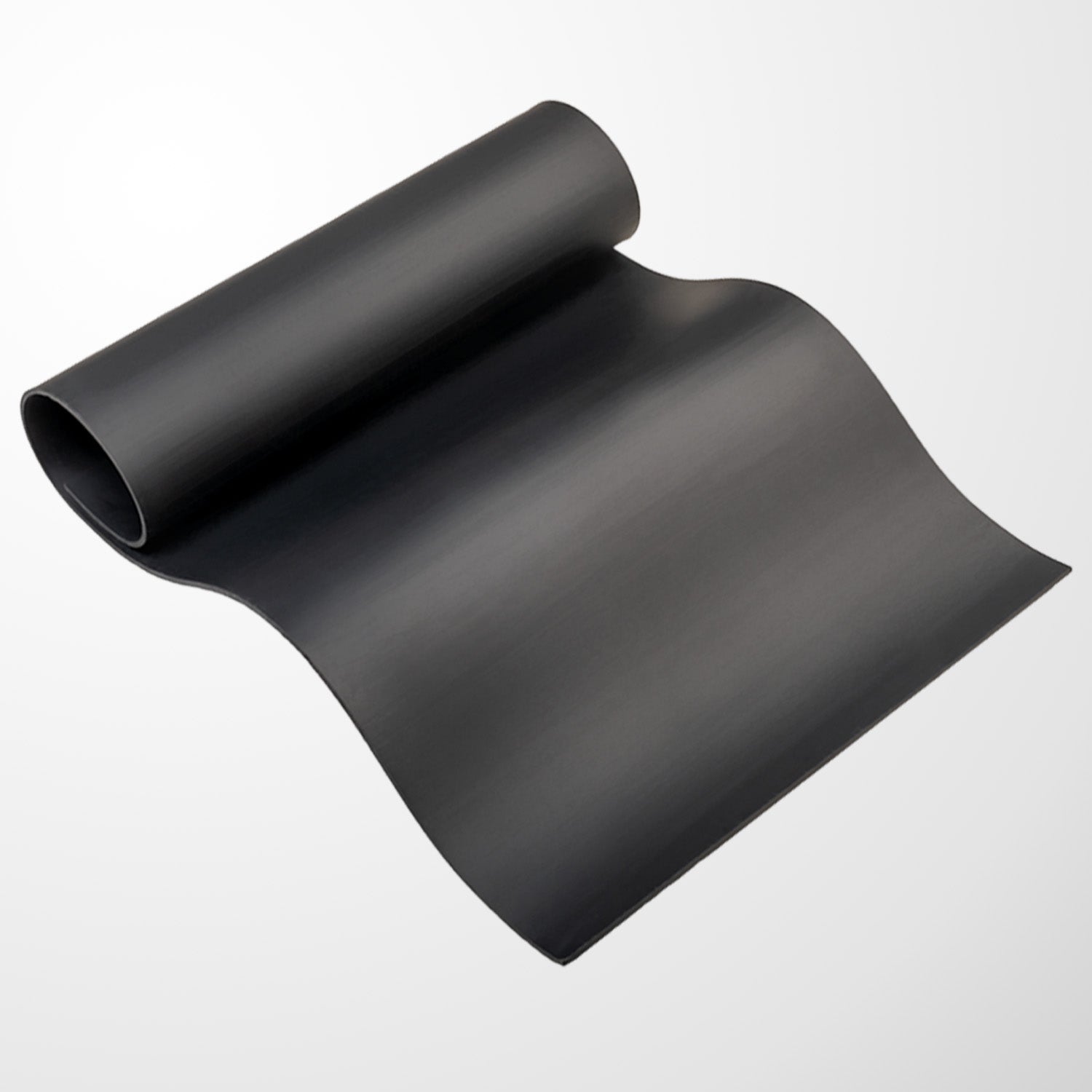
EnviroFlex 1 lb mass-loaded vinyl, 4 by 15 foot roll — link: https://www.amazon.com/dp/B0DT4Y1P7H?tag=gett00-20
Ventilation is the part you cannot skip. A generator inside a box needs air in and exhaust out, or it will overheat and can catch fire. Build the intake and exhaust openings as baffles, which are right-angle turns in the airflow path. Sound travels in straight lines and loses energy at every turn, so a baffled opening lets air through while trapping noise. The exhaust must vent completely outside the box.
Three checks before you trust the box. First, the intake opening must be at least as large as the generator’s own cooling air intake, and nothing in the box may block that intake or the exhaust outlet. Line the walls, not the vents. Second, leave clear air space around the unit on every side so cooling air can reach it. Third, test it. With the generator running in the box, you should feel air moving in at the intake and hot air leaving at the exhaust. If the box feels hot to the touch, or the engine sounds strained, shut it down and open it up. Never run a generator in a sealed box, a garage, a shed, or a basement. Opening doors and windows is not enough ventilation. Carbon monoxide kills people who get this wrong, and it kills them fast.
The kit: ZombieBox ZHUT
If you do not want to build a box, there is a ready-made one. The ZombieBox ZHUT is a galvanized steel running cover and acoustic barrier that fits most portable generators up to 12,000 watts. It works two ways. Stood up as a barrier between the generator and the house, the manufacturer lists a 10 decibel cut, which is about 50 percent quieter. Laid down as a weather shelter over the generator, the listed cut is 4 decibels. That shelter mode is also how you run a generator in the rain: the cover keeps the unit and its outlets dry while it runs.
It costs about $399, weighs 73 pounds, and measures 36 by 28 by 29 inches. It is heavy and it is not cheap, and owners report mixed results on how much quieter it actually sounds. But for a buy-it-once solution with no building and no ventilation math, it is the kit that exists. Airflow is built into the design. In barrier mode the generator sits in open air behind a steel wall, so nothing restricts cooling at all. In shelter mode it is a vented cover, not a sealed box, and the maker states the design cuts noise without inhibiting airflow or cooling. The larger ZombieBox enclosures add powered exhaust fans on top of that. The larger ZombieBox enclosures, with forced-air fans, run $900 and up and cut 10 to 14 decibels, but at that price you are halfway to an inverter generator, which is the quieter machine in the first place.
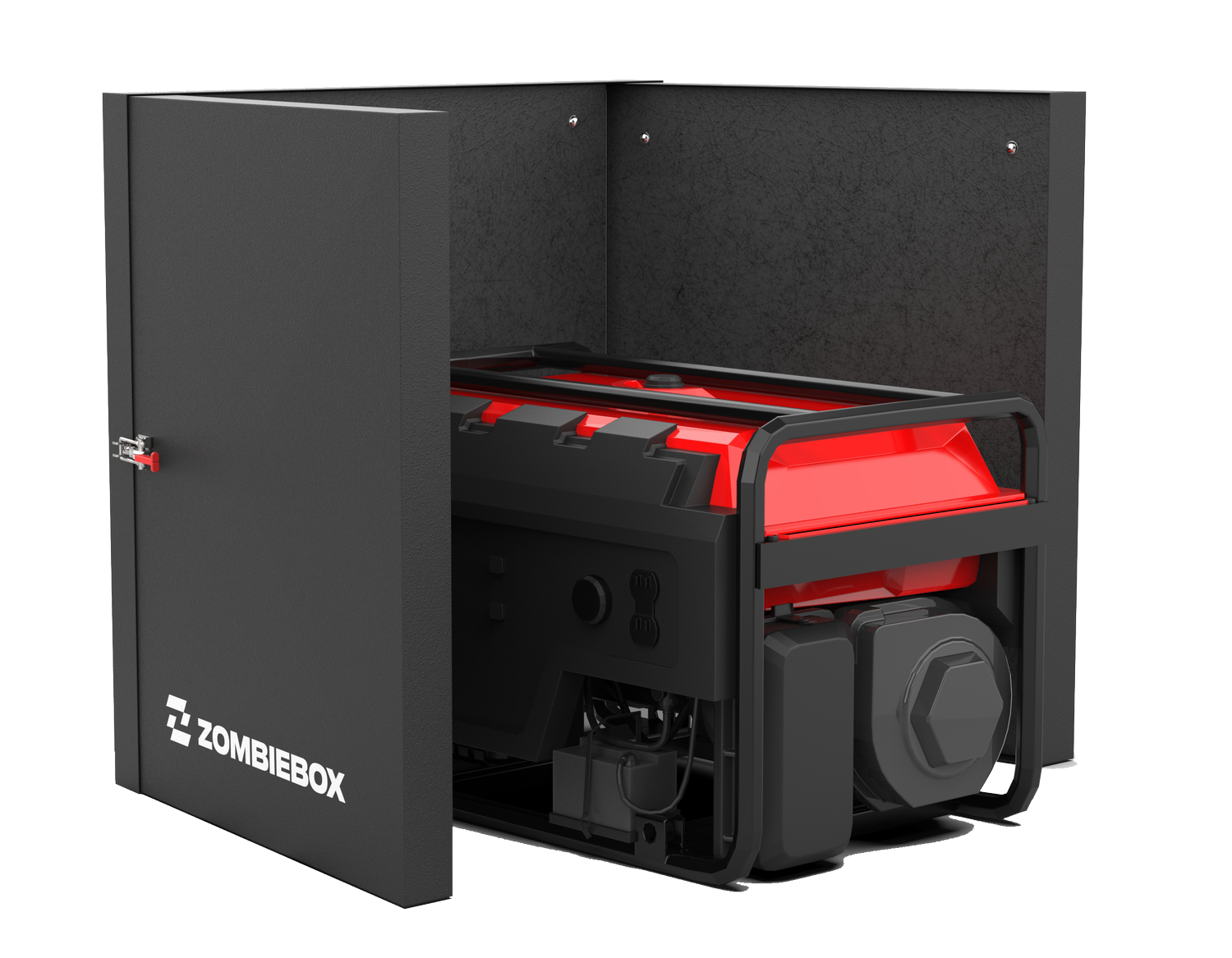
ZombieBox ZHUT generator running cover and acoustic barrier, about $399 — link: https://www.amazon.com/dp/B09PZCV6J8?tag=gett00-20
Running it in the rain
A generator cannot run uncovered in the rain. Rain on live outlets and connections is a shock risk, and a soaked generator is an electrical hazard. This is the problem that ends most quieting plans, because the obvious answer, a tarp draped over a running generator, is dangerous. A tarp traps heat, blocks airflow, and can melt onto hot parts.
The kit solves it. The ZHUT in shelter mode is a rain cover as well as a noise cover, and it keeps the connections dry while the generator runs. The DIY version is a baffle box with a sloped roof that overhangs the walls, so rain runs off instead of in. The sides stay open at the bottom for air. If the box has no roof, it is not finished.
Exhaust add-ons
An aftermarket muffler or an exhaust extension is the last lever. A flexible exhaust pipe routed away from the house, or a larger muffler fitted to the stock exhaust, can cut 5 to 10 decibels at the spot where you are listening. Small-engine mufflers are model-specific, so there is no one part to link here. Search for one made for your generator model.
One caution. Any exhaust modification can create backpressure, and too much backpressure can burn an exhaust valve. If you add a muffler, keep the pipe short and the diameter the same size or larger than stock, and do not run the generator with a blocked or kinked exhaust.
What not to do
The most common quieting trick is also the most dangerous one. Do not move the generator into the garage, under the deck, or against the house to muffle it. That is how carbon monoxide gets inside. The 20-foot rule exists because generators kill more people with exhaust gas than with anything else. Keep it outdoors, keep it 20 feet from the house, and point the exhaust away from every window, door, and air intake.
Do not fully enclose a running generator in anything without airflow, including a box you built yourself. Do not cover it with a tarp or a blanket while it runs. Do not point the exhaust at a fence or a wall to bounce the sound away. Hard surfaces reflect sound back toward the house, so you gain nothing and you trap hot exhaust gas against a surface that can catch fire.
The New Jersey number you should know
New Jersey’s noise rules set a daytime limit of 65 decibels and a nighttime limit of 50 decibels, measured at the property line of the person complaining. Nighttime runs 10 p.m. to 7 a.m. The state noise council’s own guidance tells generator owners to respect sleeping hours and consider turning generators off overnight. Fines run up to $2,000 a day for residents.
Here is the nuance that matters. Running an emergency generator during an emergency is exempt from those limits. While the power is out, the limit does not apply to you. It applies to testing the generator on a quiet Saturday, and to running it after the emergency is over. So the law will not stop you from keeping the fridge cold during a storm. But your neighbor can still complain, the police can still come out, and the goodwill you burn by running a loud generator all night is real. The fixes in this article cost little and they buy you sleep and neighbors at the same time.
If you are buying new
If you have not bought a generator yet, buy an inverter. An inverter generator at quarter load runs 50 to 58 decibels, which is quieter than most open-frame generators after every fix in this article. It costs more per watt, but it is the only fix that makes the engine itself quieter instead of muffling a loud one.
For the full picture on running a generator off your barbecue gas line, including the quiet inverter models that make sense for a house, see our guide to tri-fuel generators. For battery backup that makes no noise at all, see our comparison of large portable power stations.
Related reading
- The Quiet Generator That Runs Off Your Barbecue Gas Line — link: /tri-fuel-generator-barbecue-gas-line/
- Best Large Portable Power Stations Compared — link: /best-large-portable-power-stations-compared/
General educational information only. Always consult a licensed professional about your specific situation. As an Amazon Associate, we earn from qualifying purchases.